
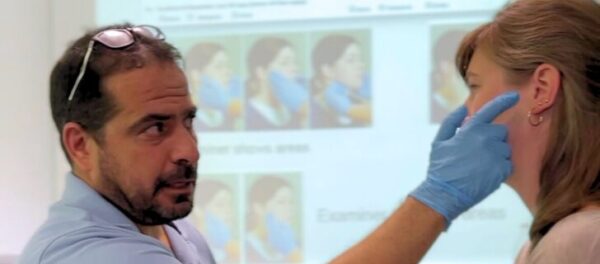
Terapia stawów skroniowo-żuchwowych
3 500,00 zł
Zaburzenia stawu skroniowo-żuchwowego (TMD – Temporomandibular Disroders) odnoszą się do kilku powszechnie występujących jednostek klinicznych obejmujących mięśnie żucia, staw skroniowo-żuchwowy (TMJ – Temporomandibular joint) oraz struktury i tkanki sąsiadujące.
Zaburzenia stawu skroniowo-żuchwowego (TMD – Temporomandibular Disroders) odnoszą się do kilku powszechnie występujących jednostek klinicznych obejmujących mięśnie żucia, staw skroniowo-żuchwowy (TMJ – Temporomandibular joint) oraz struktury i tkanki sąsiadujące. TMD to jedna z najczęstszych przyczyn bólu w obszarze orofacjalnym. Oprócz tego, TMD często pozostają przyczyną podstawowych ograniczeń funkcjonalnych, tj. trudności w żuciu, mówieniu, przełykaniu czy ziewaniu. Dodatkowo pacjenci z TMD często cierpią również na inne zespoły bólowe, takie jak migrena, napięciowe bóle głowy, przewlekłe ból odcinka szyjnego kręgosłupa oraz szeroka gama dysfunkcji kompleksu głowowo-szyjno-barkowego. Problemy te dotykać mogą zarówno osób dorosłych, jak i dzieci.
W ramach tego kursu uczestnicy nauczą się:
- Skutecznej, opartej na dowodach naukowych oceny pacjentów z TMD i powiązanymi zaburzeniami.
- Praktycznych metod diagnozowania i usprawniania procesu leczenia osób cierpiących na TMD oraz współistniejące schorzenia.
Po ukończeniu kursu uczestnik będzie w stanie:
- Poznać aktualne podstawy naukowe dotyczące bólu i dysfunkcji układu mięśniowo-szkieletowego w obrębie regionu czaszkowo-żuchwowego.
- Rozpoznać objawy i symptomy poważnych problemów medycznych u osób z bólem czaszkowo-żuchwowym (np. czerwone flagi) oraz odpowiednio na nie reagować.
- Praktycznie ocenić, zdiagnozować i rozpoznać najczęstsze wzorce kliniczne u pacjentów z zaburzeniami stawu skroniowo-żuchwowego (TMD).
- Zastosować odpowiednie wnioskowanie kliniczne, oparte na planowaniu i prowadzeniu terapii osób z TMD i powiązanymi schorzeniami.
- Skutecznie i bezpiecznie leczyć pacjentów z zaburzeniami stawu skroniowo-żuchwowego oraz towarzyszącymi dolegliwościami.
09:00 – 09:45
Rozpoczęcie kursu. Omówienie spraw organizacyjnych. Autoprezentacja. Wprowadzenie.
09:45 – 10:30
Kliniczne podstawy naukowe zorientowane na praktykę – część 1.
10:30 – 10:45
Przerwa
10:45 – 11:30
Kliniczne podstawy naukowe zorientowane na praktykę – część 2.
11:30 – 12:15
Kliniczne podstawy naukowe – anatomia i mechanika
12:15 – 12:30
Przerwa
12:30 – 13:15
Mechanizmy bólu i palpacja kliniczna
13:15 – 14:00
Praktyczna palpacja układu żucia
14:00 – 15:00
Przerwa
15:00 – 15:45
Połączenia szyjno-żuchwowe oparte na dowodach naukowych
15:45 – 16:30
Kliniczne rozumowanie i różnicowanie TMD – część 1
16:30 – 17:15
Kliniczne rozumowanie i różnicowanie TMD – część 2
09:00 – 09:45
Przypomnienie zagadnień dnia 1. i wprowadzenie do dnia 2.
09:45 – 10:30
Palpacja wewnątrz jamy ustnej – część 1.
10:30 – 10:45
Przerwa
10:45 – 11:30
Palpacja wewnątrz jamy ustnej – część 2.
11:30 – 12:15
Ocena fizyczna i diagnostyka TMD wg DC-TMD – część 1.
12:15 – 12:30
Przerwa
12:30 – 13:15
Ocena fizyczna i diagnostyka TMD wg DC-TMD – część 2.
13:15 – 14:00
Integracja oceny klinicznej TMD
14:00 – 15:00
Przerwa
15:00 – 15:45
Ocena i leczenie bólowych TMD – mięśnie zamykające usta
15:45 – 16:30
Ocena i leczenie bólowych TMD – mięśnie otwierające usta – cześć 1.
16:30 – 17:15
Ocena i leczenie bólowych TMD – mięśnie otwierające usta – cześć 2.
09:00 – 09:45
Przypomnienie zagadnień dnia 2 i wprowadzenie do dnia 3.
09:45 – 10:30
Ocena i leczenie stawowych TMD – część 1
10:30 – 10:45
Przerwa
10:45 – 11:30
Ocena i leczenie stawowych TMD – część 2
11:30 – 12:15
Ocena i leczenie stawowych TMD – część 3
12:15 – 12:30
Przerwa
12:30 – 13:15
Ocena i leczenie wewnątrzstawowych TMD – część 1
13:15 – 14:00
Ocena i leczenie wewnątrzstawowych TMD – część 2
14:00 – 15:00
Przerwa
15:00 – 15:45
Bruksizm i szyny zgryzowe – mity i fakty
15:45 – 16:30
Prezentacja przypadku klinicznego
16:30 – 17:15
Burza mózgów, zakończenie i podsumowanie kursu, rozdanie certyfikatów
Uzyskaj unijne wsparcie …
… i płać nawet 50% mniej za szkolenia!
Nieważne czy masz 18, 35 czy 58 lat!
Dzięki dofinansowaniu z Unii Europejskiej, możesz skorzystać z nieoprocentowanej „Pożyczki na kształcenie” – bez prowizji, bez dodatkowych kosztów, a na koniec – uzyskać nawet 50% umorzenia!
Nie zwlekaj i skorzystaj już dziś – ilość środków jest ograniczona!
Ekspert kliniczny w zakresie rehabilitacji bólu mięśniowo-szkieletowego i orofacjalnego
Dr Tzvika Greenbaum
Dr Tzvika Greenbaum jest czołowym fizjoterapeutą specjalizującym się w rehabilitacji pacjentów z zaburzeniami odcinka szyjno-czaszkowo-żuchwowego. Uzyskał tytuł licencjata fizjoterapii (BPT) na Uniwersytecie w Hajfie, tytuł magistra fizjoterapii mięśniowo-szkieletowej i sportowej na Uniwersytecie Australii Południowej oraz tytuł doktora fizjoterapii na Uniwersytecie w Tel Awiwie.

Ukończył dwa staże podoktoranckie: na Katolickim Uniwersytecie w Louvain w Belgii, gdzie badał wydolność mięśni podczas otwierania ust, oraz na Uniwersytecie Ben-Guriona, gdzie prowadził badania nad funkcjonowaniem odcinka szyjno-czaszkowo-żuchwowego u osób z obturacyjnym bezdechem sennym. Jest starszym wykładowcą na Uniwersytecie Ben-Guriona oraz wykładowcą na Uniwersytecie w Tel Awiwie, a także prowadzi praktykę kliniczną w Herzliya Medical Centre.
Badania naukowe dr. Greenbauma koncentrują się na związku pomiędzy funkcją układu mięśniowo-szkieletowego a zaburzeniami mowy, połykania i głosu oraz na nowoczesnych metodach leczenia bólów głowy i bólu orofacjalnego. Założył Akademię Szyjno-Czaszkowo-Żuchwową (Cervico-Cranio-Mandibular Academy – CCMA), aby połączyć praktykę kliniczną z badaniami naukowymi. Jest również uznanym na świecie instruktorem suchego igłowania. Jego nagradzane badania były publikowane w czołowych czasopismach naukowych, a on sam regularnie prowadzi wykłady na całym świecie.

Opinie
Na razie nie ma opinii o produkcie.